Drake Wins The Brand War While Everyone Else Fights For Credibility
From "Not Like Us" to 500 million net worth: why Aubrey Graham's brand of strategic adaptation, emotional accessibility, and total market ownership made him uncancelable even when he got publicly demolished.
In 2024, Kendrick Lamar destroyed Drake. Publicly. Musically. Culturally. Personally. "Not Like Us" became the anthem, the Grammy winner, the song your grandmother knows. The Pulitzer Prize winner out-rapped the hitmaker. The critic's darling out-credentialed the pop star. The battle was so one-sided that rap historians will teach it for decades, podcasters built careers analyzing it, and Drake became a meme template for taking Ls.
By 2025, Drake was worth 500 million, selling out tours, breaking streaming records, and launching a new album cycle. The guy who "lost" was winning bigger than ever. The guy who "won" was... also winning, but that's Kendrick's story. Drake's story is more interesting: how to lose publicly and monetize privately. How to take the L and turn it into leverage. How to get punched in the face on record and charge admission for the replay.
This isn't luck. This isn't "all publicity is good publicity." This is Law 1 perfected. Own A Meaning, Not A Market. Drake doesn't own rap credibility. He doesn't own the battle. He doesn't own "best rapper alive." He owns "the guy who makes music for whatever you're going through." And somehow, that meaning survived the biggest public loss of his career. Almost like credibility is overrated. Almost like feelings pay better than respect.
Welcome to the brand that proves losing can be a strategy. (Try that with your startup pitch deck.)
The Loss That Wasn't: Law 40 as Judo
(Or: How to Exit a Fight You're Losing)
Most artists would have retreated after "Not Like Us." Apologized. Explained. Disappeared for a "reflective period." Maybe a documentary about growth. Maybe a podcast about healing. Drake released "The Heart Part 6," got clowned into oblivion for it, then went silent. Strategically. Completely. While Kendrick was performing at the Super Bowl, Drake was counting money. While Kendrick was collecting Pulitzer praise, Drake was collecting streaming royalties. Different games. Different scoreboards.
Law 40: Control The Narrative During Crisis.
Drake didn't control the narrative. He exited it. He let Kendrick have the victory lap, the cultural moment, the critical acclaim, the "savior of hip hop" narrative. He let the rap world crown a new king. Then he went back to making music for people who don't care about rap battles, which is, apparently, most people.
The silence was calculated. The absence was a strategy. While Kendrick was being important, Drake was being everywhere else. For everyone else. The 19-year-old going through a breakup who doesn't know who Pulitzer is. The 35-year-old at the gym who wants tempo, not thesis. The club that needs bodies moving, not cultural commentary. Drake's brand was never "best rapper." It was "soundtrack to your life." The battle didn't change that. It just proved it. Almost like "best" and "biggest" are different categories. Revolutionary concept in rap.
The Emotion Economy: Law 4 as Dominance
(Or: Why Feelings Pay Better Than Respect)
Drake doesn't make music for rap critics. He makes music for people feeling things. All the things. Constantly. Law 4: Make Them Feel Seen.
The 19-year-old who just got dumped doesn't care about Pulitzer prizes. They care that "Marvins Room" exists and understand their 2 AM texting. The guy at the gym doesn't care about lyrical complexity. He cares that "Started from the Bottom" has the right tempo for his treadmill. The club doesn't care about cultural importance. It cares that "One Dance" makes people move and buy drinks. The algorithm doesn't care about credibility. It cares about retention.
Drake's brand is emotional infrastructure. The music you put on when you don't know what you're feeling but know someone should feel it with you. Kendrick makes you think. Drake makes you feel. Both are valuable. But only one scales to 500 million. Only one gets played at weddings, funerals, gyms, clubs, breakups, and makeups. Only one is everywhere because it's nowhere specific. It's wherever you are.
The battle loss didn't damage this. If anything, it reinforced it. "Drake lost to Kendrick" became "Drake is for the fans, Kendrick is for the critics." A false binary, but a useful one. The meaning sharpened. The market clarified. The emotion remained. The guy who lost the battle kept winning the streams. Almost like the market doesn't care about your trophy case. Shocking.
The Adaptation Machine: Law 43 as Survival
(Or: How to Be "Over" for 15 Years and Still on Top)
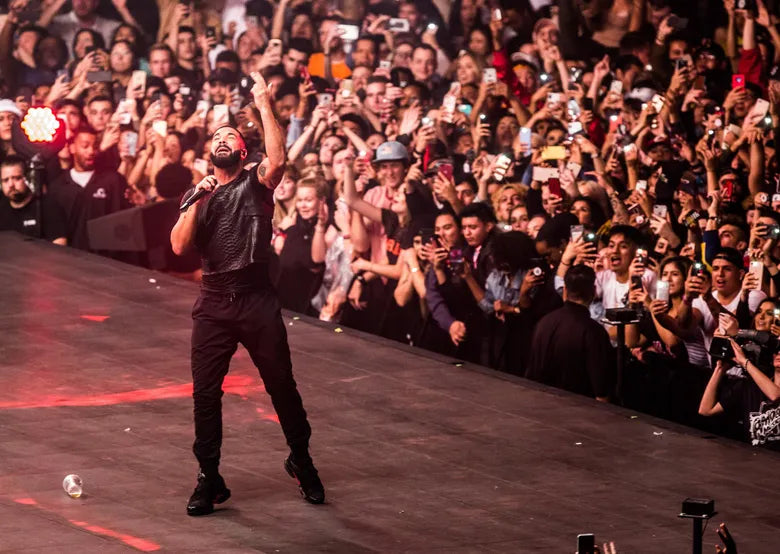
Drake has been "over" since 2012. Too pop. Too soft. Too emotional. Too Canadian. Too commercial. Too everything. Each era, a new reason he's finished. Each era, a new sound, a new aesthetic, a new market. Each era, more money.
Law 43: Stay Relevant Through Renewal.
Change the frame, keep the picture. The picture is emotionally accessible. The frame changes constantly. Rap Drake. Singing Drake. Dancehall Drake. Afrobeats Drake. House Drake. UK drill Drake. The sound shifts. The meaning stays. He's not loyal to genre. He's loyal to the feeling. The feeling of "this is what I'm going through right now." The feeling that transcends credibility, geography, and rap battles.
The Kendrick battle was just another frame change. Before: Drake, the invincible hitmaker. After: Drake, the resilient survivor. The guy who took the punch and kept building. The guy who lost the battle but never lost the audience. The guy who proved you can be publicly humiliated and privately dominant. The frame changed. The picture remained. The checks kept clearing.
Other artists would have tried to win the rematch. Prove their credibility. Reclaim their rap bona fides. Make a "real hip hop" album. Drake just... kept being Drake. Making music for people who don't care about rap battles. Who don't care about Pulitzers. Who don't care about who won what in 2024. The renewal wasn't musical. It was narrative. The story adapted. The brand endured. The revenue compounded.
The Market Ownership: Law 24 as Monopoly
(Or: Why Being the Default Beats Being the Best)
Drake doesn't compete in rap. He owns a market that rap happens to be part of. Law 24: Become The Standard Others Copy.
Every breakup song is measured against Drake. Every club hook references his formula. Every emotional rap-singing blend traces back to him. He didn't invent the style. He standardized it. He made it the default. He became the pickaxe in the emotional gold rush. The template for "how to make music that works everywhere for everyone."
Kendrick can out-rap him. Anyone can, on any given day. But no one can out-market him. No one can out-access him. No one can make music that works in as many contexts for as many people. The battle proved Kendrick was the better rapper. The balance sheet proves Drake is the bigger brand. Both can be true. Both are. One just pays better.
The BCI would show this clearly.
Brand Health: high.
Business Health: dominant.
Differentiation: not about being the best rapper, but about being the most accessible emotional soundtrack.
The score would be 85 plus. Not because he's the most respected. Because he's the most chosen. Not because he won the battle. Because he won the market that doesn't care about battles.
The Character, Not the Rapper: Law 6 as Armor
(Or: Why Being Corny Saves You)
Corporations get cancelled. Characters endure. Drake understood early.
Law 6. Become A Character, Not A Company.
The character is "Aubrey"—the emotional, sensitive, sometimes corny, always relatable guy who happens to be famous. The guy who texts his ex at 2 AM. The guy who overthinks. The guy who wants love, loses it, writes about it, and makes you feel less alone for doing the same. The guy who cries in songs and makes it seem normal. The guy who lost a rap battle and didn't pretend he won.
This character survived the battle because the battle wasn't about him. It was about rap credibility. About cultural importance. About "real hip hop." Drake's character was never built on those things. He was built on "I feel this too." The battle couldn't touch that. It just proved he wasn't Kendrick. Everyone already knew. No one cared except people who don't buy albums anyway.
The character creates immunity. When you lose a rap battle, you lose credibility. When your brand is ''emotional accessibility'', you lose nothing. Your audience isn't looking for credibility. They're looking for company. Drake provides it. Kendrick challenges it. Both work. Both sell. Just differently. One sells respect. One sells feelings. Feelings have better margins.
The Final Lesson: Meaning Survives Loss
(Even Public, Humiliating Loss)
Drake proves that in the age of infinite content and algorithmic attention, meaning remains scarce. But he also proves that meaning doesn't have to be victorious to be powerful. It has to be consistent. It has to be believed. It has to be everywhere, even when you're nowhere.
He didn't try to win the battle. He tried to maintain the meaning. The meaning of "soundtrack to your life." The meaning of "whatever you're going through, I have a song for it." The meaning of "I'm not the best, but I'm here, and I'm not leaving." The meaning that transcends rap battles, critical acclaim, and cultural moments.
The BCI would show this. A score that reflects not cultural victory but market dominance. Not critical acclaim but emotional penetration. Not the battle won but the war rendered irrelevant because you're playing a different game entirely. A better-paying game. A bigger game. A game where losing publicly doesn't cost you privately.
Or as he might put it: "I lost the rap battle. I kept the audience. I built the brand. And I'm still here. Still counting. Still making music for people who don't care who won."
That's not just survival. That's structural mastery of the Laws of Meaning, Perception, and Power. That's knowing your score. Knowing your game. And playing it while everyone else is fighting theirs. That's losing the battle of credibility and winning the war of commerce. That's Drake.
Try that with your personal brand. Publicly lose, privately win.
(See how it goes.)